Tony Gilroy and the New Direction for Star Wars in ‘Andor’
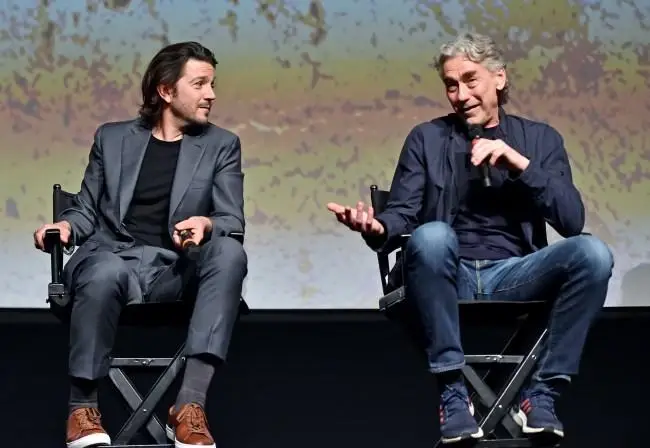
In ‘Andor,’ Tony Gilroy reshapes the Star Wars universe, not with the touch of nostalgia but through a lens of stark realism and moral complexity, daring to explore themes of decay and sacrifice beyond the typical bounds of the saga. With a bold vision initially set for five seasons, Gilroy distilled it into a two-season arc that challenges viewers with its gritty narratives and political resonance, revealing the underside of rebellion. Cassian Andor emerges in a universe where the lines between good and evil blur, heralding a fresh take on power’s twilight. From a forthright proposal that won over Lucasfilm to intense, three-episode arcs that make the Empire’s presence palpably menacing, ‘Andor’ stands out as a narrative mosaic of ambition and profound existential inquiry. As it promises to seamlessly tie into ‘Rogue One,’ the drama not only offers a gripping prelude to a beloved story but raises poignant questions about the cost of freedom. With Emmy buzz surrounding its thought-provoking themes, readers will be left wondering: what is the true price of rebellion?
#StarWars #Andor #TonyGilroy #SciFiDrama #MoralComplexity #RebellionSaga
Quick Takeaways:
- Tony Gilroy approached Andor without nostalgia for Star Wars
- The show focuses on political realism and moral ambiguity
- Andor's structure reflects cinematic discipline in storytelling
- Emmy buzz surrounds the series for its complex themes
Rethinking Sci-Fi Norms
Few recent science fiction stories challenge their own foundation in the way Andor does. Tony Gilroy, who had no sentimental attachment to the Star Wars universe, saw the project instead as a space for creative freedom. “I didn’t go into Andor wanting to make a Star Wars movie. That’s not what got me here,” he said. Gilroy originally pitched a five-season arc but later reshaped it into a tighter two-season format.
Clarity from Day One
From his first conversations with Lucasfilm, Gilroy made his position clear. His written proposal emphasized a desire to explore nuance, political complexity, and the harsh realities of power. Cassian Andor was introduced not as a traditional hero but as someone willing to make violent choices—marking a shift from the franchise’s usual approach. Gilroy explained, “The blunt email that got me the job… It was basically: If you want me to do the show, here’s what it’s going to be.” His concept wasn’t driven by spectacle; it examined how institutions break down and how individuals respond.
Structure with Purpose
Andor is divided into three-episode arcs, lending the series a disciplined format uncommon in many streaming dramas. These arcs give room to develop character motivations and to make the Empire feel unmistakably present. Each storyline builds with purpose, making the stakes feel grounded and personal.
A Story About Cost and Compromise
The show doesn’t shy away from exploring the emotional and ethical cost of resistance. Characters wrestle with choices that test their sense of self and purpose. As Andor progresses toward its established endpoint in Rogue One, it becomes a reflection on what people are willing to sacrifice, and why.
Recognition for Its Approach
As Andor's second and final season prepares to close the loop, its reception has sparked awards conversations. Far removed from lightsabers and nostalgia, the series has found its strength in darker moral terrain—raising its profile and positioning it as a standout within the Star Wars universe.
Frequently Asked Questions
Why does Tony Gilroy refuse to write content for phone viewers?
Tony Gilroy believes that storytelling deserves full attention and shouldn’t be diluted for distracted, on-the-go viewing. He crafts his work, like Andor, for engaged audiences who watch on larger screens.
How does Tony Gilroy’s approach influence the pacing of Andor?
Gilroy’s method results in a slower, more deliberate pacing that prioritizes depth and character development over quick, mobile-friendly action scenes. Andor invests time in building story arcs that reward patient viewing.
What makes Andor different from other Star Wars series?
Unlike many Star Wars shows, Andor focuses on mature themes, political complexity, and character-driven narratives, reflecting Tony Gilroy’s cinematic approach over fast-paced, casual streaming content.
Did Tony Gilroy create Andor with mobile users in mind?
No, Tony Gilroy intentionally avoided designing Andor for mobile viewing. He prioritizes immersive storytelling that benefits from full-screen experiences and undivided attention.
How does Tony Gilroy’s philosophy affect the dialogue in Andor?
The dialogue in Andor is layered and thoughtful, often conveying political nuance and emotional depth, which reflects Gilroy’s belief that viewers should be fully engaged and not multitasking.
Is watching Andor on a phone a bad experience?
While you can technically watch Andor on a phone, the show is visually and narratively designed for larger screens and focused viewing, so you may miss out on subtle details and atmosphere.
Why is Tony Gilroy critical of modern streaming habits?
Gilroy is concerned that casual, distracted viewing undermines serious storytelling. He believes that meaningful narratives require audience investment and should not be compromised for short attention spans.
Filipino Translation:
- Direct Quotes (To Remain in English):
- "I didn’t go into 'Andor' wanting to make a Star Wars movie. That’s not what got me here."
- "The blunt email that got me the job… It was basically: If you want me to do the show, here’s what it’s going to be."
- "knowing where it all ends."
-
Overall Tone and Context:
The tone is thoughtful and analytical. It praises the show Andor's unique approach and highlights the creator’s perspective and intentions. It's meant for readers who are interested in storytelling, especially in sci-fi and pop culture. -
Key Terms or Phrases Needing Special Attention:
- "moral complexity"
- "realistic political tones"
- "decay of power"
- "three-episode arcs"
- "the cost of rebellion"
- "essence of sacrifice"
- "existential questions"
- English Words or Phrases to Remain Untranslated:
- Star Wars
- Andor
- Lucasfilm
- Rogue One
- Empire (depending on usage)
- Emmy awards
- sci-fi
- drama
- Common Taglish Expressions or Structures:
- “medyo”
- “actually”
- “parang”
- “yung”
- “kumbaga”
- “’di ba”
- “feel mo”
- “ganun”
- “nag-fi-feel like”
- “in a way”
-
Appropriate Level of Formality:
Casual, conversational, similar to how friends or peers would talk about a TV show or movie casually but with some depth. -
Casual Filipino Elements:
- Use of “kasi,” “eh,” “ano,” “nga,” “naman”
- Mixing English nouns/adjectives and Filipino syntax
- Using contractions like “’di,” “ganun,” “na’to”
- Cultural Adaptation:
- Simplify philosophical or analytic terms into concepts that are relatable
- Local nuance in word choices: "kalakaran" for norms, “pulitika” for political tones etc.
- Pop Culture Considerations:
- Star Wars and Rogue One are well-known among Filipino fans, so no need to localize them
- Emmy awards might be known to many, especially in entertainment circles
- Preserving Meaning Naturally:
- Keep the essence of rebellion/sacrifice but express in approachable language
- "Decay of power" = “pagkabulok ng sistema” or “paglalaho ng credibility ng kapangyarihan”
Final Output (Taglish Translation):
Konti lang talaga ang sci-fi shows ngayon na willing i-challenge yung sarili nilang mga rules — at isa na dun yung 'Andor'. Para kay Tony Gilroy, hindi siya pumasok sa Star Wars universe dahil fan siya, kundi kasi nakita niya yung chance na makapag-express ng creativity. Sabi nga niya, "I didn’t go into 'Andor' wanting to make a Star Wars movie. That’s not what got me here."
Originally, plano niya sana na gawin itong five-season series, pero naging two seasons na lang later on.
From the start pa lang, super honest na si Gilroy with Lucasfilm — as in diretsahan talaga — at yun din yung vibe ng pitch niya. Inuna niya kasi yung gusto niyang i-explore na moral complexity at realistic na take sa politics, imbes na mag-rely sa nostalgia. Yung pagpakilala nga kay Cassian Andor sa mga eksena na need talaga ng violence, ibang level na agad — parang sinasabi niya na, “O, iba ‘to sa usual Star Wars ha.”
Sabi pa ni Gilroy, "The blunt email that got me the job… It was basically: If you want me to do the show, here’s what it’s going to be." Ang vision niya talaga, hindi lang about hope, kundi pati yung pagbagsak o pagkabulok ng kapangyarihan.
Ginamitan niya pa ng three-episode arcs yung structure ng 'Andor', na parang mini-movies bawat tatlong episodes. Ang galing eh — may discipline, cinematic yung feel, and at the same time, ramdam mo talaga yung presence ng Empire, hindi lang background noise.
Ang resulta? Isang solid na drama na talagang tinatalakay yung presyo ng pakikipaglaban at kung ano ba talaga ang ibig sabihin ng sacrifice. As the series ends at nag-transition na papunta sa 'Rogue One', parang may sense of closure na rin si Gilroy — yung feeling na "knowing where it all ends."
Sa likod ng political themes at malalalim na tanong tungkol sa existence, halatang big deal talaga yung show — kaya rin siya napansin for Emmy awards. Deserve naman, kasi ang ambitious at well thought-out ng buong concept.
Tony Gilroy Will Never Write for a Viewer Scrolling on Their Phone — and ‘Andor’ Shows It was first published here.