Crafting Star Wars Worlds: Luke Hull’s Vision for Andor
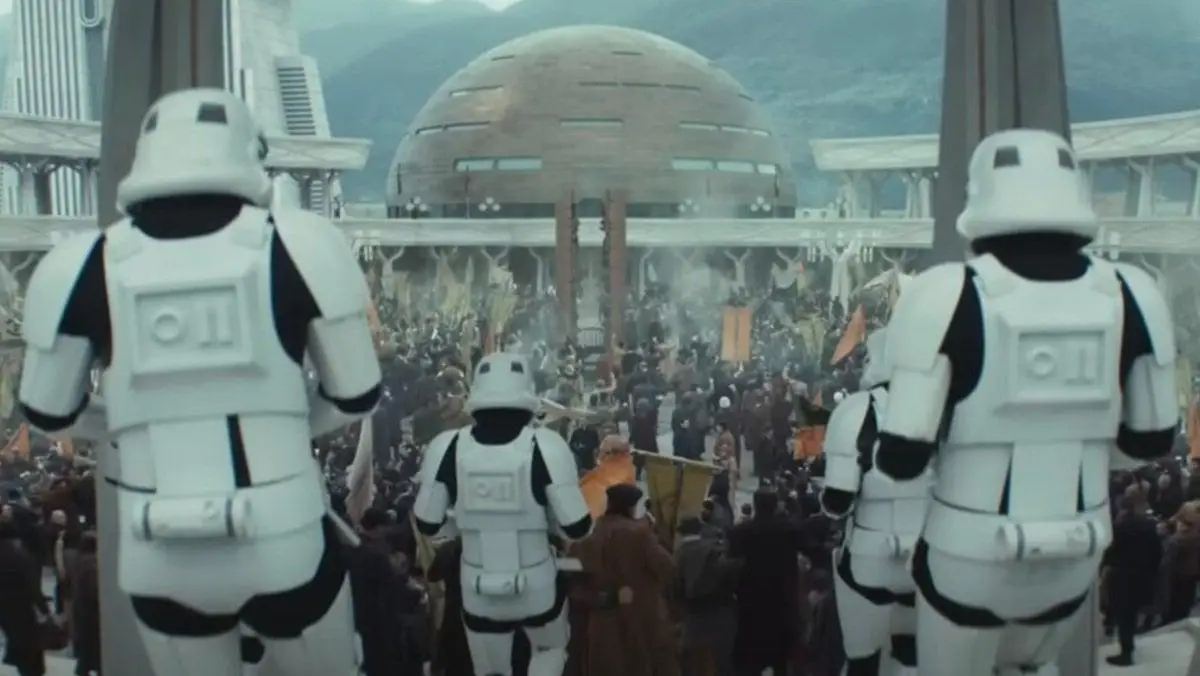
In the realm of galaxy-spanning narratives, Luke Hull, the visionary production designer of the acclaimed series Andor, masterfully intertwines the art of world-building with emotional storytelling, crafting a cinematic experience where visual splendor serves the heart of character and narrative development. As season 2 unveils the breathtaking new locales of Chandrila and the Ghorman medical complex, viewers are drawn into environments that are not merely backdrops, but emotionally charged spaces echoing with themes of influence, identity, and the weight of intergalactic politics. Hull, in collaboration with Tony Gilroy, seamlessly melds the aesthetic grandeur necessary for Star Wars with a depth that resonates with the saga’s epic lineage, using every set as an emotional catalyst for the unfolding drama.
The construction of Mon Mothma’s home, Chandrila, becomes a poignant exploration of personal and political boundaries, offering a mirror to reality in the guise of science fiction. Through Hull’s intricate design, infused with a cinematic look intrinsic to Star Wars, each environment pulsates with narrative depth, inviting audiences into a space where insurgence and legacy converge. Rooted in the nostalgia of the original trilogy yet daringly modern in its execution, Hull bridges the chasm between legend and contemporary storytelling, ensuring audiences remain on the edge of their seats not just for iconic starships and battles, but for the subtle, human stories that unfold within these richly detailed settings.
Hull’s expertise doesn’t stop at design; it’s an immersive craft that redefines storytelling within the Star Wars universe. His vision breathes life into seemingly ordinary settings, transforming them into the crucibles of rebellion and change. The unity of meticulous design and substantial narrative thrust positions Andor as a pivotal point in Star Wars lore, where history and fantasy intersect with profound purpose. With every three episodes standing as a unique cinematic piece, viewers are left eagerly anticipating how each setting will play a pivotal role in the saga’s unfolding narrative.
Dive into the vibrant and meticulously crafted world of Andor season 2, where each set is a narrative in itself, engaging not only the eyes but the heart and mind. Will the whispered tales of Chandrila and the powerful echoes of the Ghorman complex reveal new truths about the galaxy’s ever-evolving power dynamics? Witness Hull’s masterful creations and explore the thrilling convergence of saga heritage and innovative storytelling.
#Andor #StarWars #LukeHull #TonyGilroy #SciFi #Storytelling
Quick Takeaways:
- Production designer Luke Hull centers authenticity over aesthetics in building Andor’s world.
- Season 2 introduces Chandrila and the Ghorman medical complex as meaningful, story-driven settings.
- Collaborating closely with Tony Gilroy, Hull ensures each environment supports character evolution and narrative tone.
- The design honors Star Wars' legacy while grounding the visuals in realism and emotional depth.
Building Worlds with Purpose
Luke Hull, recognized for his production design in Andor, approaches the Star Wars galaxy as more than a design project. For Hull, each environment is an extension of the show's emotional and narrative core. Inspired by what’s in the script, every set, from gritty urban corners to expansive political chambers, is created to serve the characters and their journeys. Season 2 brings this vision to life with the first live-action appearance of Chandrila—Mon Mothma’s stately yet haunted home—and the Ghorman medical complex, a charged location that reflects key story themes.
Spaces That Feel Real
Hull explains that emotional resonance always comes before visual impact. His approach favors authenticity—crafting locations that feel lived-in and meaningful rather than merely spectacular. This design philosophy is shared by series creator Tony Gilroy, who views each trio of episodes as its own cinematic offering. Hull supports this structure by giving every setting a distinct mood and purpose, helping each segment of the series feel grounded and cohesive.
Chandrila: More Than a Backdrop
In developing Chandrila, Hull was guided not only by architecture and color palettes, but by deeper character and political implications. The planet reflects Mon Mothma’s layered identity—its beauty, restraint, and cultural symbolism echo her personal and public struggles. The design speaks to ideas of displacement, control, and influence—wider themes explored throughout the rebellion story. Rather than presenting a generic future city, Hull brings together cultural cues and emotional contrast to capture a world that feels both alien and recognizable.
Working With Legacy, Not Just Nostalgia
Hull’s work touches familiar visual territory from the original trilogy and Rogue One but never relies on it. Even everyday spaces—including residential interiors or hidden resistance outposts—are designed to move the story forward. These environments allow viewers to connect not only through legacy ships or iconic planets, but via the smaller, human-scaled locations where ordinary people rise up and organize. Hull ensures the visuals support both character choices and the emotional stakes.
A Grounded Vision for Star Wars
By shaping the look and feel of Andor around character arcs and political themes, Luke Hull has helped craft a version of Star Wars that feels immediate and resonant. His focus on reality-inflected design strikes a balance between spectacle and intimacy—honoring the franchise while offering a more personal lens through which to explore it.
Frequently Asked Questions
Who is the production designer for Star Wars: Andor?
Luke Hull is the production designer for Star Wars: Andor. He is responsible for crafting the visual environments and design aesthetics seen throughout the series.
How was Chandrila designed for the Andor series?
Chandrila was designed to reflect a clean, refined culture of political influence, contrasting with other locations in the Star Wars universe. Luke Hull used modernist architecture and serene color palettes to capture its prestigious, yet restrained identity.
What inspired the look of Yavin in Star Wars: Andor?
The design of Yavin in Andor took cues from its original appearance in A New Hope but incorporated fresh details to reflect the timeline’s earlier stage. Luke Hull aimed to balance nostalgia with story-driven practicality in the Rebel base design.
Was Ghorman a new location introduced in Andor?
Ghorman is a familiar name to long-time Star Wars fans, but its visual depiction in Andor marks one of its first live-action appearances. The production design emphasized its political tension and growing unrest to align with the story narrative.
How does Luke Hull approach world-building in Star Wars: Andor?
Luke Hull focuses on grounding each location in a believable culture and history, aligning visual elements with the emotional tone of the story. He combines set design, architecture, and real-world references to create immersive environments.
What challenges did the Andor design team face when creating new planets?
One key challenge was ensuring each world felt unique yet consistent with the Star Wars universe. The team had to balance creativity with lore accuracy, while also accommodating practical filming logistics.
Filipino Translation:
Luke Hull, na kilala sa work niya sa Andor as the nominated production designer, nire-reimagine niya yung Star Wars galaxy not just para magmukhang bongga, pero bilang isang space kung saan nagde-develop yung mga characters at story. Sa season 2, makikita na yung live-action debut ng Chandrila at yung malupit na Ghorman medical complex — gawa raw ‘yon sa “story and character and what’s on the page,” sabi ni Hull. Ibig sabihin, for him, mas importante yung emotional authenticity kaysa sa visual pa-show.
Kasama si Tony Gilroy, ginagawa ni Hull na living part ng kwento bawat set — hindi lang background; parang karakter din, diba? Importante yung vibe at cinematic style para ma-feel talaga ng audience yung depth ng mundo ng Andor, pati na rin yung details ng design.
Yung dedication ni Hull para sa realism, swak na swak sa mythical at deep na peg ng Andor. Habang niya-create sila ng Chandrila, yung hometown ni Mon Mothma, hindi lang ito basta design project — nire-reflect din niya yung mga themes gaya ng influence, identity, at displacement. Parang pinapakita na kahit futuristic yung setting, relevant pa rin yung struggles na ‘to — lalo na sa politics at personal beliefs.
Hull din daw nagwo-work towards a “cinematic look that is intrinsic to Star Wars,” which aligns sa idea ni Gilroy na bawat three episodes, parang individual cinematic piece. So bawat environment, may lalim — may kwento, may symbol, hindi lang basta location.
Inspired man by nostalgia nung original trilogy at yung gritty feels ng Rogue One, nagagawa ni Hull na i-connect yung legendary vibe ng Star Wars sa modern way of storytelling. Parang ngayon, hindi na lang tayo na-e-excite sa mga sikat na starships or ancient relics — nafi-feel din natin yung realness sa mga daily places kung saan nagsisimula yung rebellion. Hindi lang ito basta design — parang storytelling talaga siya, na pinaghalo yung history, fantasy, at purpose. Sobrang bagay sa Andor, kasi sakto siya sa gitna ng classic saga at new world-building ng Star Wars universe.
‘Andor’ Production Designer, Luke Hull, on Creating Chandrila, Ghorman, Yavin, and More – Star Wars News Net was first published here.