The Revolution Will Not Be Star Wars
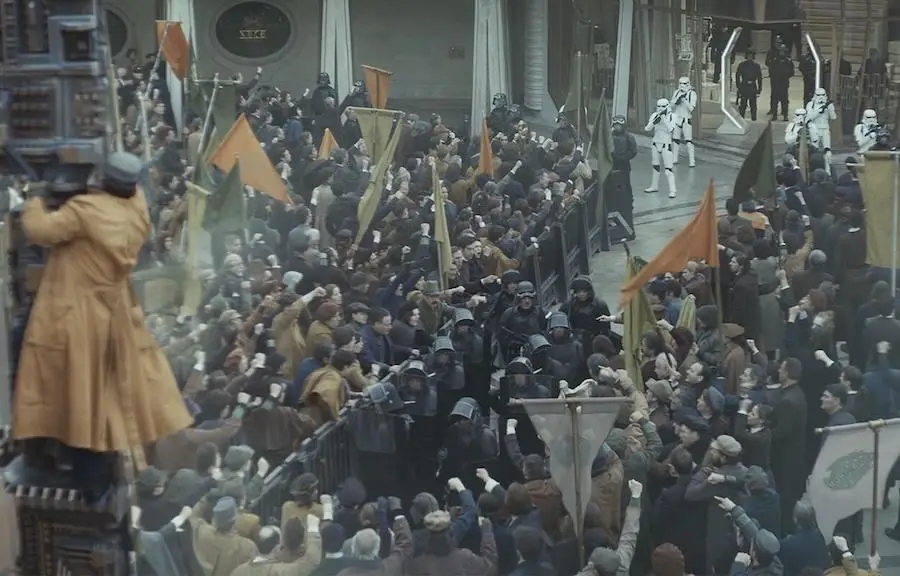
In a galaxy not so far away, Star Wars has become a universal symbol for the struggle between good and evil, its epic battles and iconic characters capturing the imagination of generations. Yet, beneath its enchanting allure lies a myth that presents a skewed simplicity in understanding true rebellion, where the righteousness of rebels starkly contrasts genuine revolutions’ chaotic and ambiguous nature. This article delves into the dichotomy between the comforting allure of Star Wars’ fantasy and the complex reality of activism, noting how genuine struggles often lack the clear moral delineations of George Lucas’ universe. Frustration bubbles among activists as they grapple with the perennial melding of fantastical iconography with actual dissidence, reminding us that revolution’s stakes are far graver than any fictional encounter. Star Wars may promise the reassurance of clear-cut heroes and villains, but when the tides of change truly sweep through history, the outcomes are much murkier, the heroes less defined, and the battles far less theatrical. Step beyond the second Death Star’s shadow to explore how revolutions unfold with unpredictable heroes and victories, challenging the notion of binary morality entrenched in the scenes of our favorite saga.
#StarWars #Activism #CulturalCritique #Revolution #MythVsReality #PopularCulture
Quick Takeaways:
- Star Wars imagery continues to show up in protests and sociopolitical movements.
- The saga offers clear moral simplicity that rarely applies to real-world struggles.
- Activists express concern over the use of fictional heroics to frame real resistance.
- True revolutions are less cinematic and far more complicated than what the films suggest.
A Galaxy of Protest Signs
Few film series have left as enduring an impression on global consciousness as Star Wars. Its symbols—stormtroopers, lightsabers, the Rebel insignia—regularly appear in public demonstrations, adopted as shorthand for defiance or injustice. But what does it mean when a pop culture epic becomes a stand-in for actual resistance? The piece examines this recurring parallel, arguing that while the franchise offers emotional clarity and moral comfort, it doesn't fully reflect the complexity of genuine social movements.
Heroes and Villains, Too Clearly Drawn
The original trilogy, and much of what came after, relies on an unmistakable moral template. Rebels are noble; empires are oppressive. Lightsabers glow in hues that signal allegiance. These binaries, while powerful in their simplicity, fail to capture the murkiness of real-world change. Stories of resistance rarely unfold with such clean lines. The idea of confronting a “Death Star” can put dangerous systems into graspable shapes, but it also flattens the deeper, messier truths behind upheaval.
Escape Versus Engagement
Behind the story’s archetypes—Luke Skywalker’s path of growth, Leia’s resilience, the Empire's industrial menace—lurks a foundation based more on myth than lesson. While George Lucas borrowed heavily from Joseph Campbell’s ideas of the heroic journey, the outcome is more comfort than confrontation. Protests using the saga’s code give people a familiar visual language, yet some organizers feel this can obscure the lived risks and unpredictability of grassroots resistance.
Not Everyone's Vader
Interviewed activists note that comparing someone to Darth Vader flattens their motivations, and painting oneself as a Jedi doesn’t mean the path to justice comes with guidance from the Force. Real-life decisions don’t split neatly into light and dark. The recurring adoption of Imperial and Rebel roles, they argue, can risk turning complex social efforts into narratives that prioritize spectacle over substance.
The Messiness of Real Revolution
Ultimately, the piece offers a quiet challenge: to appreciate the power of fictional storytelling without letting it replace reflection or responsibility. When change does come, it won't arrive with orchestral swells or sweeping camera shots. It will come through setbacks, debates, contradiction—and people figuring things out as they go. There may be no second Death Star, no final celebration. But there is truth in the ambiguity, even if it’s harder to cheer for.
Frequently Asked Questions
What does “The Revolution Will Not Be Star Wars” mean?
“The Revolution Will Not Be Star Wars” is a phrase that critiques the commercialization and spectacle of rebellion in pop culture, suggesting that real social or political revolutions won’t mirror the action-packed, Hollywood-style conflicts portrayed in Star Wars.
Is “The Revolution Will Not Be Star Wars” a critique of modern media?
Yes, it critiques how media, especially big franchises like Star Wars, can romanticize or commodify the idea of rebellion, potentially detracting from the realities of genuine social movements.
How does “The Revolution Will Not Be Star Wars” relate to activism?
It emphasizes that real activism involves everyday effort, sacrifice, and community organizing—unlike cinematic portrayals of revolution that often focus on individual heroism and dramatic battles.
Is “The Revolution Will Not Be Star Wars” based on the Gil Scott-Heron poem?
The phrase is inspired by Gil Scott-Heron’s poem “The Revolution Will Not Be Televised,” adapting its message to critique the glamorized depictions of resistance in pop culture like Star Wars.
What is the message behind “The Revolution Will Not Be Star Wars”?
The message is that true societal change won’t come through cinematic narratives or entertainment tropes but through real-world engagement, struggle, and solidarity.
How does pop culture influence views on revolution?
Pop culture can shape how people perceive revolution, often making it seem flashy, quick, or led by chosen heroes, which may overshadow the complex, grassroots nature of actual movements.
Why is Star Wars used as a reference in the phrase?
Star Wars is one of the most iconic depictions of rebellion in modern media, making it a powerful symbol to contrast against the less glamorous reality of real-world revolutions.
Filipino Translation:
Grabe, 'yung Star Wars, sobrang laki talaga ng impact sa pop culture. Kahit saan ka pumunta, may reference—sa mga placard ng protesta, sa everyday na salita ng mga tao. Pero kung iisipin mo, medyo sobrang simple nung kwento niya—parang may malinaw na bida at kontrabida. Ang mga rebelde, automatic good guys, tapos 'yung Death Star, obvious na evil. Kahit inspired siya sa mga myth ni Joseph Campbell, parang sobrang linis at cinematic nung rebellion doon—malayo sa real-life na gulo at ambiguity ng totoong rebolusyon.
Sabi nga sa article, meron daw “the comfort of a second Death Star.” Ibig sabihin, parang may escapism—lumulubog tayo sa kwento na sobrang ideal, kahit alam nating bihirang mangyari 'yan sa totoong buhay.
Sa likod ng mga iconic characters kagaya nina Luke Skywalker na may sariling quest, si Leia na super tapang, at 'yung Empire na parang picture-perfect na authoritarian regime—nando’n 'yung idea na myth lang talaga siya. Pampakampante lang, hindi guide kung paano lumaban sa totoong mundo. May mga aktibistang nagsabi na napo-frustrate sila kasi ang daming gumagamit ng Star Wars imagery sa tunay na laban, kahit iba naman talaga ang pinaglalaban. Sabi nga nila: “the stakes are not the same when you know you are not Vader.”
Kaya naman sobrang alluring ng galaxy na ‘yon—kasi may illusion siya ng order sa gitna ng chaos. Parang ang linaw ng good vs. evil, at kapag nakuha mo ‘yung Force, automatic panalo ‘yung good guys. Pero kung dadating man ang totoong rebolusyon, 'di siya magiging parang Star Wars. Mas magulo, mas uncertain kung sino talaga ang bayani, at mas mahirap ikwento 'yung mga tunay na nangyari. Diba?
The Revolution Will Not Be Star Wars was first published here.