Andor’s Unorthodox Approach to Villainy and Romance
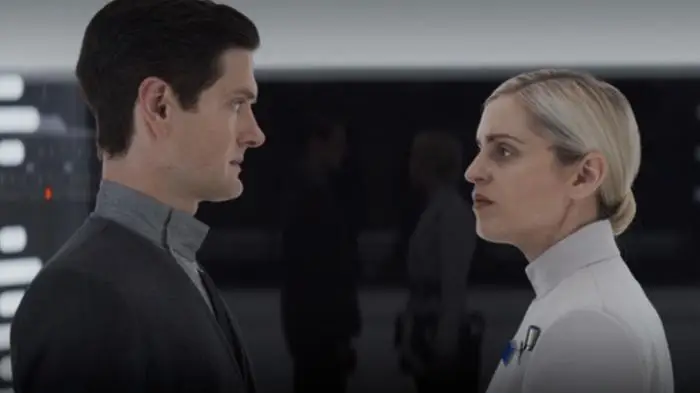
Discover the compelling complexity of villainy in Star Wars: Andor, where Dedra Meero and Syril Karn redefine evil through their relentless obsession and unyielding ambition. In a universe typically defined by clear lines between heroes and villains, Andor delivers a fresh narrative that exposes the underbelly of moral decay, with Dedra and Syril unapologetically embracing their dark nature. This departure from sentimental clichés offers a raw, unfiltered portrayal of aspirations twisted by power, inviting viewers into a story thick with tension and unpredictability. Their villainous bond is not softened by redemption but rather intensified by a ruthless pursuit of control, making them authentically chilling figures within the Star Wars saga. As the series unfolds, viewers are left on the edge, wondering how deep into the darkness these characters will venture, defying expectations and leaving a lasting impact on the lore. Dive into this gripping tale where the most captivating stories arise from those who refuse to be redeemed.
#StarWarsAndor #VillainyReimagined #DarkDrama #UnyieldingAmbition #NewSagaTwists
Quick takeaways:
- Andor presents two Imperial characters without redemption arcs
- Dedra Meero and Syril Karn are linked through shared obsessions
- The show resists turning its villains into sympathetic figures
- A darker, more grounded take on evil in the Star Wars universe
A Relationship Fueled by Obsession
In Star Wars: Andor, the connection between Dedra Meero and Syril Karn redefines how villainy can be portrayed in this galaxy. Unlike the familiar dynamic of a charismatic antagonist headed toward redemption, these two Imperial officers are portrayed as relentlessly driven, deeply flawed individuals fueled by personal ambition and fixation. Their scenes together carry a disturbing energy—two people recognizing their worst qualities in one another.
This bond isn't about romance or redemption. It's shaped by their mutual willingness to serve a brutal system and do whatever it takes to climb its ruthless hierarchy. Their connection heightens the sense of instability every time they share the screen, making their interactions some of the most unpredictable moments in the series.
No Redemption, No Excuses
What sets Andor apart is its refusal to soften or excuse its villains. While much of Star Wars often frames the dark side through stories of seduction and inner conflict, Andor gives us Dedra and Syril as people who fully embrace their ideology. There’s no tragic backstory here to explain their alignment—only unflinching ambition and control.
Their behavior isn't glamorized, and the show never asks viewers to sympathize with them. Instead, it reveals the full extent of how personal insecurities, bureaucratic power, and authoritarian loyalty can combine to form something dangerous and uncompromising. As pointed out in the article, “they are, to the bone, awful people,”—and that’s exactly the point.
A New Kind of Story Within Star Wars
By focusing on two antagonists who are neither mythic nor emotionally torn, Andor challenges long-held expectations tied to this franchise. Instead of vivid battles between good and evil, the focus is more grounded—on ethics, politics, and the personal price of ambition. Rather than serving as a backdrop, the Empire here is personal, oppressive, and chilling in its bureaucracy.
This approach gives Andor a place apart from its predecessors. The show presents moral decay not just as a trait of the system, but as something internalized and perpetuated by those eager to rise within it. It’s an examination of personal integrity (or lack thereof) inside a machine that rewards conformity and cruelty.
By reflecting on what drives people like Dedra and Syril—not how they might be saved—Andor offers one of the most compelling portraits of villainy in any Star Wars story to date.
Frequently Asked Questions
Who are the villains in ‘Andor’ with the romantic subplot?
In ‘Andor,’ Dedra Meero and Syril Karn develop a complex and intense connection that hints at a villainous romance. Their dynamic is charged with tension and obsession, making their relationship compelling to watch.
Is there a romantic relationship between Dedra Meero and Syril Karn?
While not explicitly romantic, the connection between Dedra and Syril carries strong undercurrents of romantic tension and shared ambition. Their interactions suggest a twisted mutual fascination that blurs the line between ally and obsession.
Why is the ‘Andor’ villain romance considered unique?
The villain romance in ‘Andor’ is unique because it focuses on two morally ambiguous characters who are driven by power, control, and ideology rather than love. Their strange, slow-burning connection adds depth and intrigue to the story.
Does ‘Andor’ explore the psychology of villain romance?
Yes, ‘Andor’ delves into the psychological motivations behind its characters, particularly Dedra and Syril, whose cold intensity and shared values make their bond feel deeply unsettling yet human. The series uses their connection to explore control, loneliness, and ambition.
How does the Dedra and Syril relationship impact Andor’s plot?
Their relationship influences the plot by intensifying the oppressive reach of the Empire and showing how personal ambition fuels systemic cruelty. Their growing connection adds a layer of emotional tension to the Empire’s pursuit of Cassian Andor.
Are villain romances common in Star Wars stories?
Villain romances are rare in Star Wars, which traditionally focuses on heroic love stories. ‘Andor’ breaks the mold by portraying a dark, unsettling relationship between two authoritarian figures, offering a fresh and complex narrative element.
Filipino Translation:
Sure! Here's the casual Taglish translation of the provided English text:
Yung Star Wars: Andor, iba ‘yung approach nila sa mga kontrabida, eh. Hindi siya ‘yung usual na may charm tapos may redemption arc. Dito kasi, sina Dedra Meero at Syril Karn yung focus—pareho silang super driven pero ruthless din, and yung bond nila, parang nabuo dahil pareho silang obsessed. Ang bigat ng mga eksena nila, kasi pareho silang may deep understanding sa sariling kadiliman, kaya laging intense at unpredictable ‘yung mga scenes nila.
Yung Andor, standout siya kasi ‘di niya sinusubukan i-soften yung image nina Dedra at Syril. Hindi rin nila trinay gawing relatable or misunderstood heroes ang dalawa. Instead, talagang pinakita kung gaano sila ka-villain, both bilang individuals at bilang part ng system. Yung motives nila, sobrang twisted, pero yun ‘yung nagtutulak sa kwento forward. Katulad nga ng sabi sa article, "they are, to the bone, awful people," kaya ang solid ng pagka-portray nila—may depth, tapos hindi siya typical sa Star Wars na universe.
Dahil dito, iba talaga yung feels ng Andor compared sa ibang Star Wars stories. Imbes na puro sentimental na good vs evil ang peg, dina-dissect dito kung ano talaga yung nagpapaandar sa mga antagonists. Para sa mga fans na sanay sa black and white na kwento, parang sinasabi ng Andor na, "Uy, may gray area din ‘to." Pinapakita niya na kahit sa isang universe na punong-puno ng heroes at villains, minsan, pinaka-interesting pa rin yung kwento ng mga taong ayaw magbago.
‘Andor’ Gave Us A Villain Romance for the Ages was first published here.