20 Years of Revenge of the Sith: Lucas’s Timeless Political Reflections
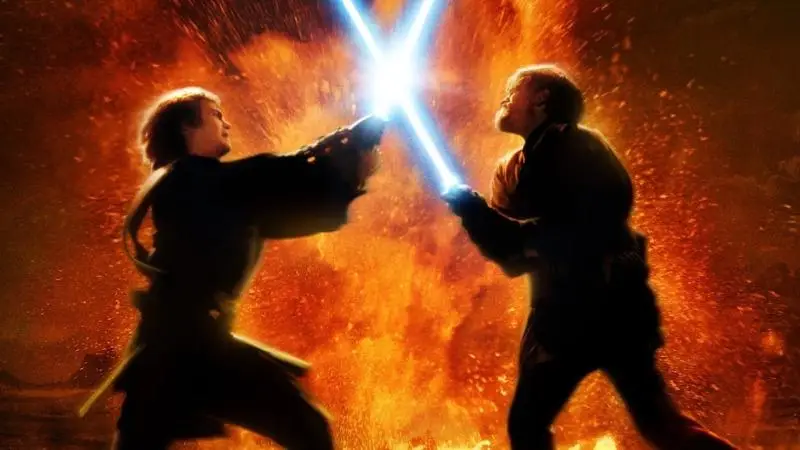
As the 20th anniversary of “Revenge of the Sith” draws near, George Lucas’s masterful depiction of democracy’s fragility continues to strike a chord, offering a chilling reflection of current global political challenges. Set against the backdrop of the Iraq War’s divisive climate, the film draws striking parallels between Emperor Palpatine’s ominous rise to power and real-world authoritarian tendencies, echoing contemporary fears through Anakin’s charged declaration: “If you’re not with me, then you’re my enemy.” The saga’s enduring relevance intensifies as Padmé Amidala’s haunting observation about liberty’s demise—dying to “thunderous applause”—remains disquietingly applicable today.
At its heart, the transformation of Anakin Skywalker into Darth Vader paints a poignant portrait of how disillusionment can propel individuals away from democratic principles toward authoritarianism, a narrative woven intricately through conversations and character arcs. From the seduction of power to the subtle manipulation of democratic institutions, Palpatine’s calculated moves serve as a powerful cautionary tale, urging vigilance in safeguarding freedoms.
With a rich exploration of political themes that resonate with today’s threats to democracy, the film’s messages are both a reflection and a forewarning of what happens when vigilance wanes. How do these cinematic political allegories mirror our world and what lessons lie untouched? Dive into the compelling narrative that foresaw much of today’s political climate and consider how art continues to illuminate the pathways to preserving liberty.
#StarWars #Democracy #RevengeOfTheSith #PoliticalThriller #GeorgeLucas #AnniversaryReflection
Quick Takeaways:
- Revenge of the Sith’s political themes remain timely as global democracies face new pressures.
- Released during the Iraq War, the film connects fictional authoritarianism with real-world political decisions.
- Character arcs, including Anakin’s fall, illustrate how fear and disillusionment can erode democratic values.
A Look Back as the Film Nears Its 20th Anniversary
As the twentieth anniversary of Star Wars: Revenge of the Sith approaches in 2025, the film continues to engage audiences with its political commentary. Directed by George Lucas and released in 2005 during the height of the Iraq War, the movie reflected the anxieties of its era—particularly around the balance between security and liberty. Lucas embedded subtle political critiques within this final chapter of the prequel trilogy, making it a film that still resonates today.
The Politics Behind the Fall of the Republic
Revenge of the Sith explores the fragility of democratic systems through the manipulation and eventual collapse of the Galactic Republic. The rise of Chancellor Palpatine, portrayed as a charismatic leader who expands his authority under the guise of national security, echoes concerns that were circulating in the early 2000s. His consolidation of power is strikingly familiar to those who recall executive overreach and the justification of war through claims of existential threats.
Anakin Skywalker’s declaration, “If you’re not with me, then you’re my enemy,” mirrors polarizing public discourse from that time, particularly rhetoric used in the wake of 9/11. This moment captures how moral absolutism can escalate political divides and discourage opposition, a dynamic that continues to shape modern governance.
The Crowd’s Role in Eroding Liberty
Padmé Amidala’s somber line—“So this is how liberty dies… with thunderous applause”—remains one of the film’s most cited and sobering quotes. It speaks to how public fear and the promise of order can lead people to support the very structures that limit their freedoms. The scene offers a reminder that the erosion of democratic norms often happens with public approval, not in secret or silence.
The Character Study of Anakin Skywalker
Beyond politics, the personal arc of Anakin Skywalker deepens the film’s reflection on how democratic values can be abandoned. His journey from a well-intentioned Jedi Knight to Darth Vader shows how fear of loss and a desire for control can lead to catastrophic choices. Seeds of this shift were already planted in Attack of the Clones, especially during a quiet conversation with Padmé about the efficiency of authoritarian rule. Revenge of the Sith continues that thread, showing how gradually a character can turn to coercion when systems seem broken.
Systems Bent, Not Broken
Palpatine doesn’t destroy the Republic overnight. Instead, he uses the Senate, the legal system, and even the Jedi to achieve his goals. This methodical strategy shows how institutions meant to protect freedom can be turned into tools of control by someone who understands their internal weaknesses. While set in a galaxy far, far away, this insight has real-world relevance, especially when democratic safeguards are under pressure from within.
Why the Film Still Matters
Revenge of the Sith remains more than a digital spectacle or a turning point for its characters; it’s a timely reflection on how fragile freedom can be when fear dominates public life. As democracies worldwide face renewed tests, the themes in this Star Wars film continue to resonate—rousing fans to look beyond starships and lightsabers to the very structure of governance and power in their own lives.
Frequently Asked Questions
Why is “Revenge of the Sith” considered George Lucas’ magnum opus?
“Revenge of the Sith” is often seen as George Lucas’ magnum opus because it represents the darkest, most emotionally intense chapter of the Star Wars saga and fully realizes his vision of Anakin Skywalker’s tragic fall to Darth Vader.
What are the most misunderstood elements of “Revenge of the Sith”?
Many viewers overlook the film’s deeper political allegories and character development, focusing instead on its dialogue and action sequences, leading to misinterpretations of its emotional and narrative depth.
How was “Revenge of the Sith” received when it was first released?
Upon its release in 2005, “Revenge of the Sith” received mixed but generally more favorable reviews than its prequel predecessors, with praise for its darker tone and intense storyline.
What legacy has “Revenge of the Sith” built 20 years later?
Twenty years later, “Revenge of the Sith” is viewed more favorably by fans and critics alike, with many appreciating its emotional weight, visual effects, and its impact on Star Wars lore.
Why do people say “Revenge of the Sith” is remembered for the wrong reasons?
Some believe the film is overshadowed by memes, famous one-liners, and criticisms of its dialogue, rather than being recognized for its powerful themes and emotional storytelling.
How did “Revenge of the Sith” influence later Star Wars stories?
The film laid critical groundwork for future Star Wars media by explaining the fall of Anakin, the rise of the Empire, and the roots of major conflicts explored in subsequent movies and shows.
Filipino Translation:
As we get closer to the 20th anniversary ng "Revenge of the Sith" sa 2025, parang mas lalo pa ngang naging relevant 'yung mga themes nito about democracy at power. Nung unang pinalabas siya — around the time ng Iraq War — halatang may political statements na sinisingit si George Lucas, lalo na kung paano na-link ‘yung pag-angat ni Palpatine sa certain policies ng U.S. government nung time na ‘yun. ‘Yung sinabi ni Anakin na, “If you’re not with me, then you’re my enemy,” sobrang tumama talaga noon — parang reflection ng very divided na vibe ng politics dati… and even now, diba?
Today, parang mas ramdam pa ‘yung relevance ng mga political messages sa “Revenge of the Sith,” especially ngayon na ang daming nangyayaring challenges sa mga demokratikong bansa. ‘Yung fact na ginamit ni Palpatine ang fear para ma-control ‘yung system, sobrang scary pero at the same time, reminder na pwedeng mangyari talaga ‘yun kahit saan. ‘Yung linya ni Padmé na liberty dies “with thunderous applause” — ang lakas maka-goosebumps, kasi totoo, minsan tayong mga tao, di natin namamalayan, sinusuportahan na pala natin ‘yung pagbagsak ng freedom.
Tapos kung titignan mo ‘yung mga characters, grabe rin ang journey, lalo na si Anakin. ‘Yung transformation niya into Darth Vader, parang symbol ng kung paano ‘yung isang tao, once hopeful and idealistic, pwedeng mahulog sa authoritarian path dahil sa takot at disillusionment. Hindi siya biglaan, tulad nung argument nila ni Padmé sa “Attack of the Clones” about autocracy — nagsimula na pala dun ‘yung shift sa mindset niya. Samantalang si Palpatine, chill lang sa pag-manipulate ng democratic system — kita mo talaga paano nagagamit ang mismong sistema para sirain ‘yung freedom nila. Ang galing pero nakaka-alarm din, kasi parang sinasabi sa atin, “Oy, bantay kayo sa nangyayari sa paligid n’yo.”
All in all, kahit pa sci-fi lang siya, ang dami pa ring real-world lessons sa “Revenge of the Sith.” Kaya siguro hanggang ngayon, tumatagos pa rin siya sa mga tao.
Revenge of the Sith At 20: George Lucas’ Magnum Opus Is Remembered For The Wrong Reasons was first published here.